 @MRSADYBRUSSELS
AVANT-GARDE: pitching a creative house
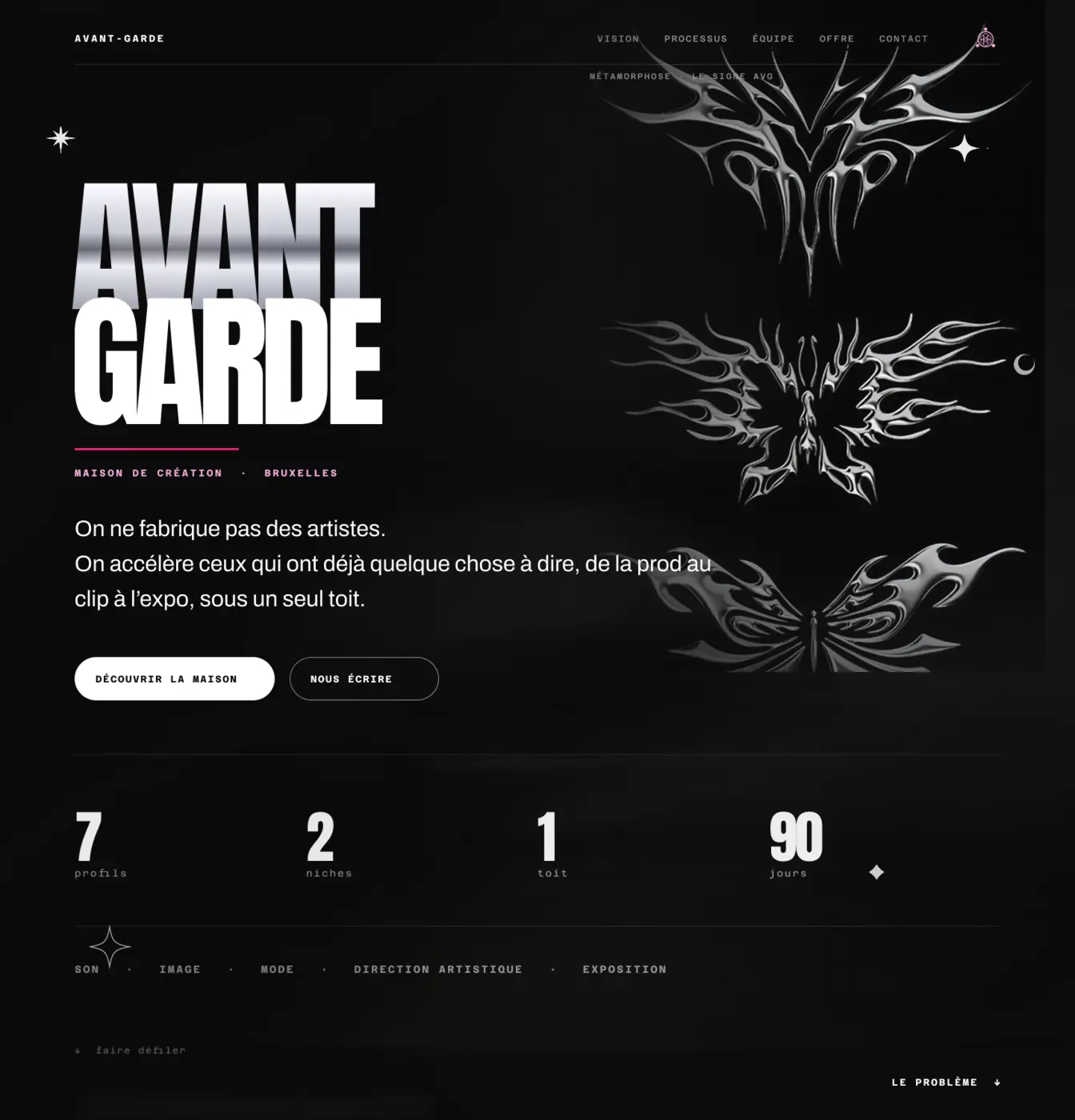
Six contacts, six invoices, nobody in charge of direction: how the AVANT-GARDE pitch deck tells the story of a Brussels creative house, from the problem to the finish line.
Seven archetypes named after films, an eight-step plan, seven levels from Static to Supernova: how an application helps artists move from noise to signal.
« Too many choices. Not enough direction. Thousands of tutorials. Zero strategy. The industry rewards volume, not vision. »
The diagnosis, on the application's “About” page
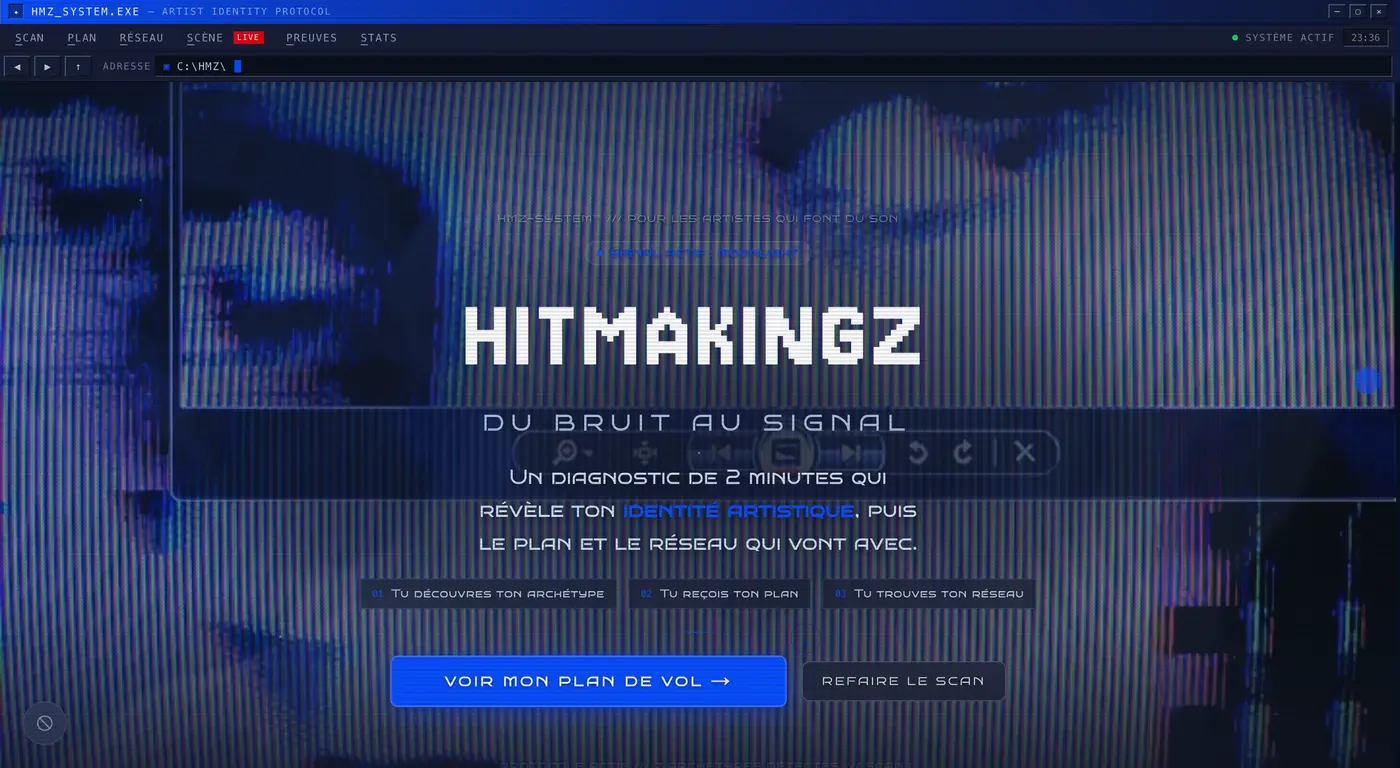
HITMAKINGZ doesn't sell visibility: it gives an artistic identity. The principle fits in one sentence — from noise to signal. We identify who the artist is, we draw a plan from it, we connect them to compatible artists. I designed the UX/UI and developed the application.
It all starts with the Scan: nine questions that reveal the artist's archetype. An archetype is a way of creating, not a musical genre. There are seven, each named after a film:
The Scan produces a Signal Card: archetype, frequency, strengths, serial number. It can be shared — it is the artist's business card inside the network.
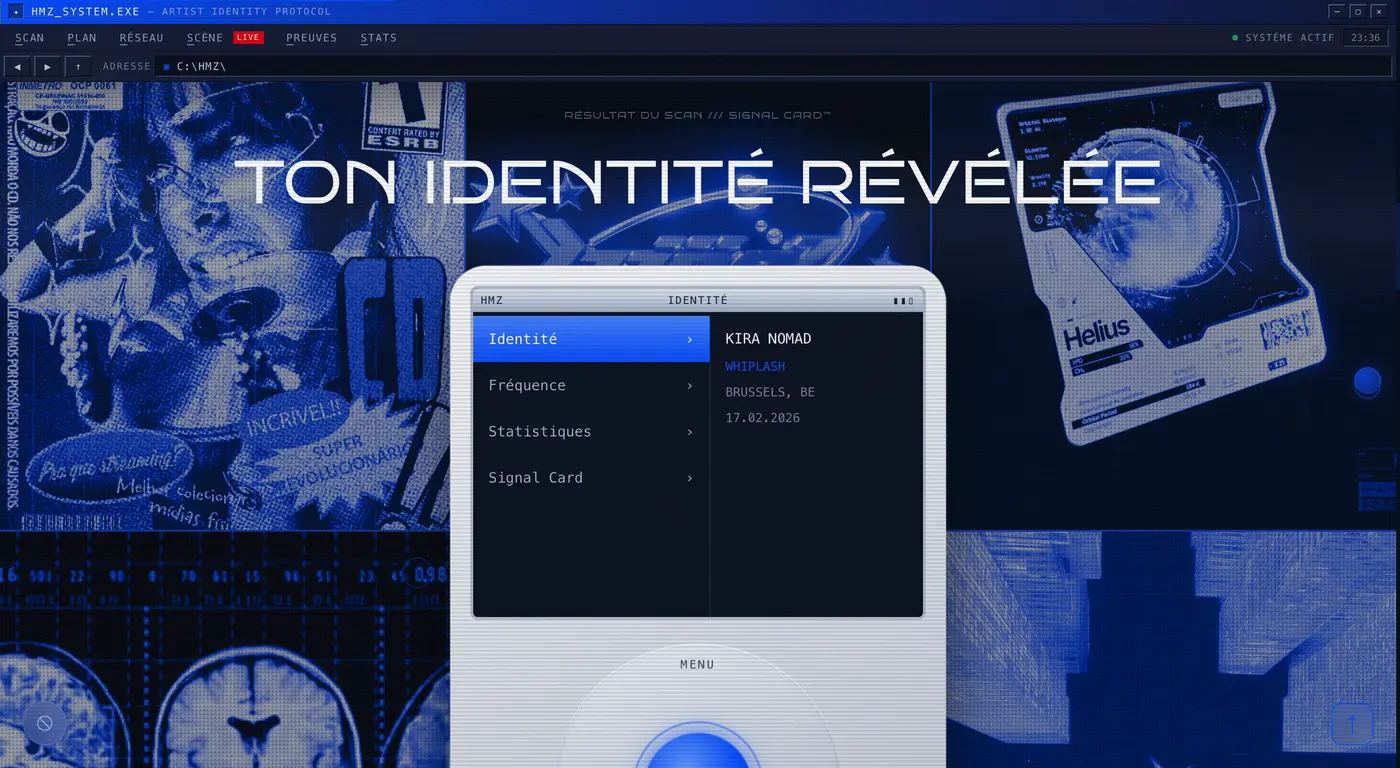
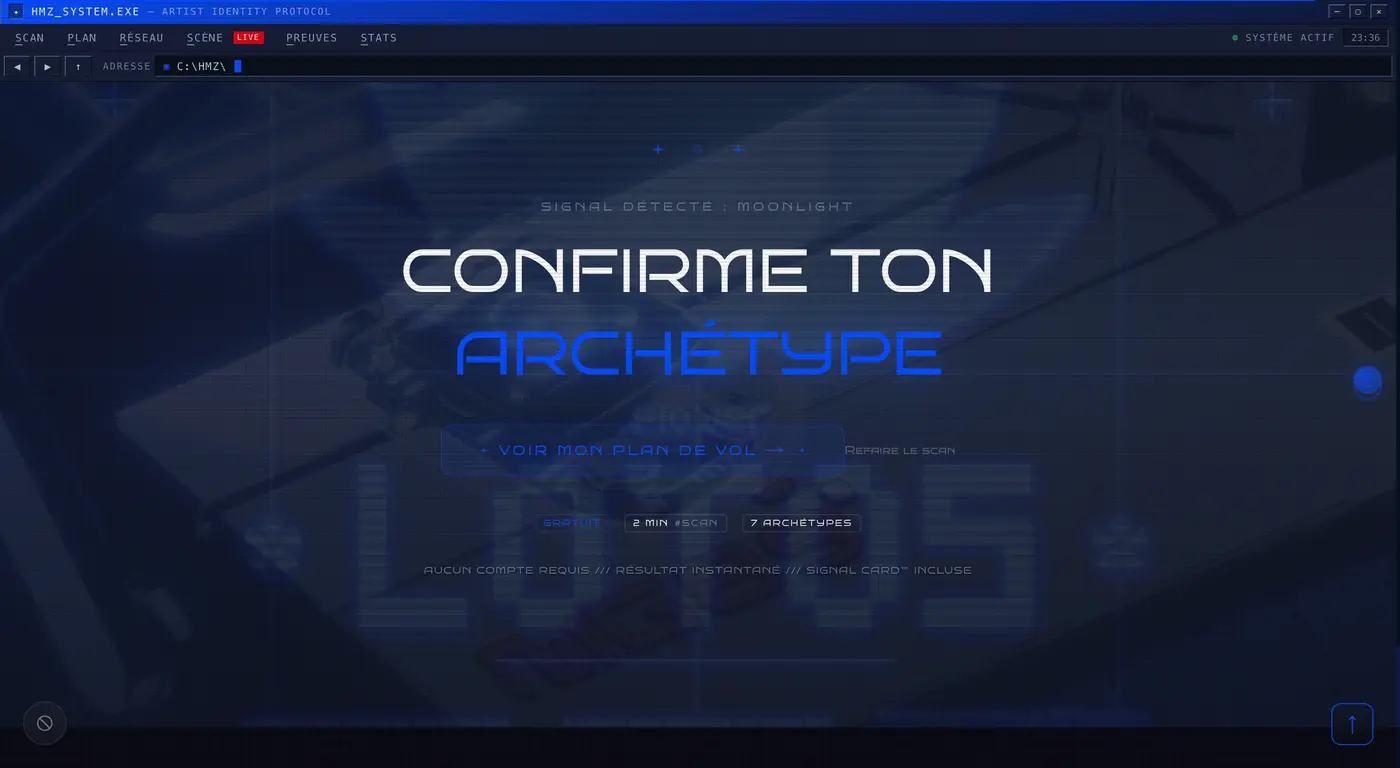
The Plan turns the archetype into concrete steps — what to release, at what pace, on which channels — to move from noise to signal in 90 days:
Every action earns experience. Seven levels, from STATIC (0 XP) to SIGNAL (200), PULSE (500), FREQUENCY (1,000), BROADCAST (2,000), RESONANCE (4,000) and SUPERNOVA (8,000). Quests guide the first steps: complete the Scan, build your Plan, share your Signal Card, join the Network, land a first match.
The interface commits to the game all the way: a retro operating-system window (HMZ_SYSTEM.EXE), an address bar in the style of C:\HMZ\, and six spaces — Scan, Plan, Network, Stage (live), Proof, Stats.
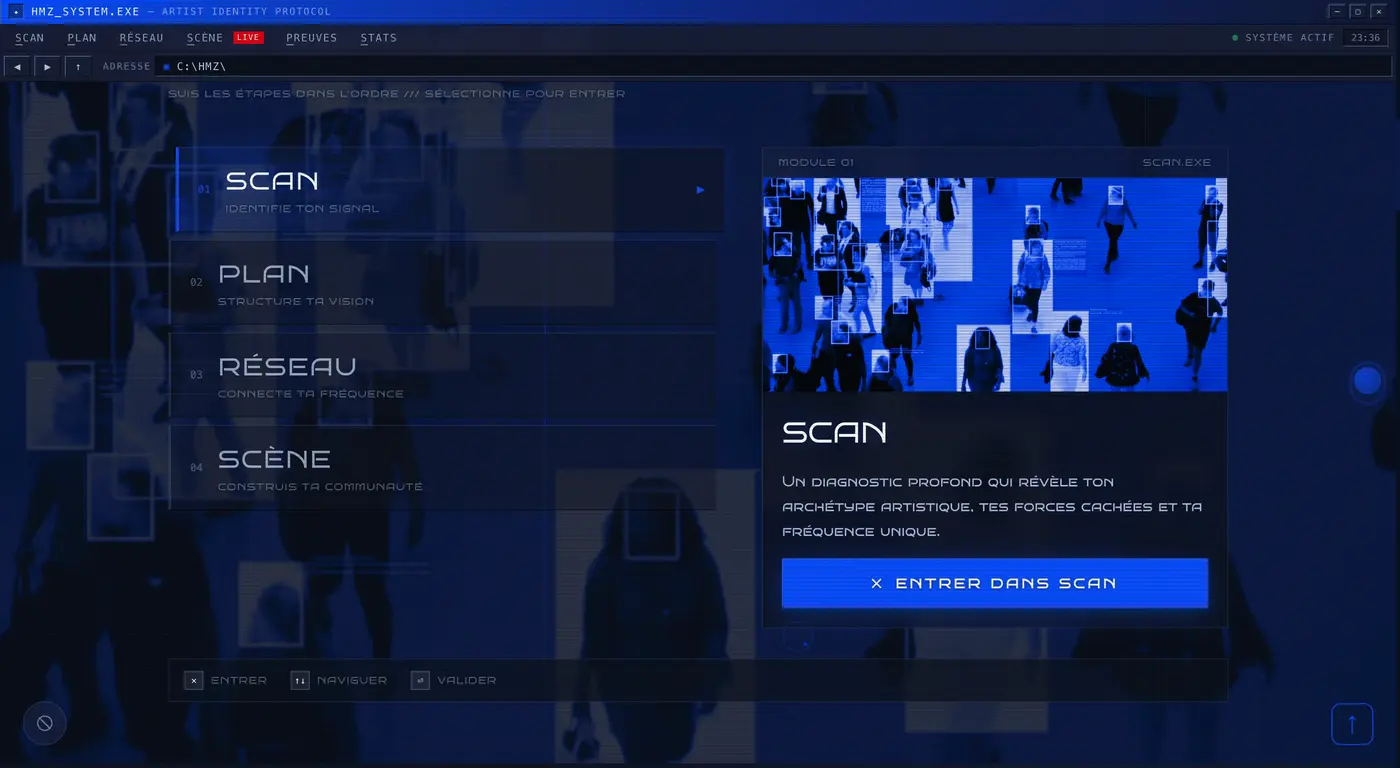
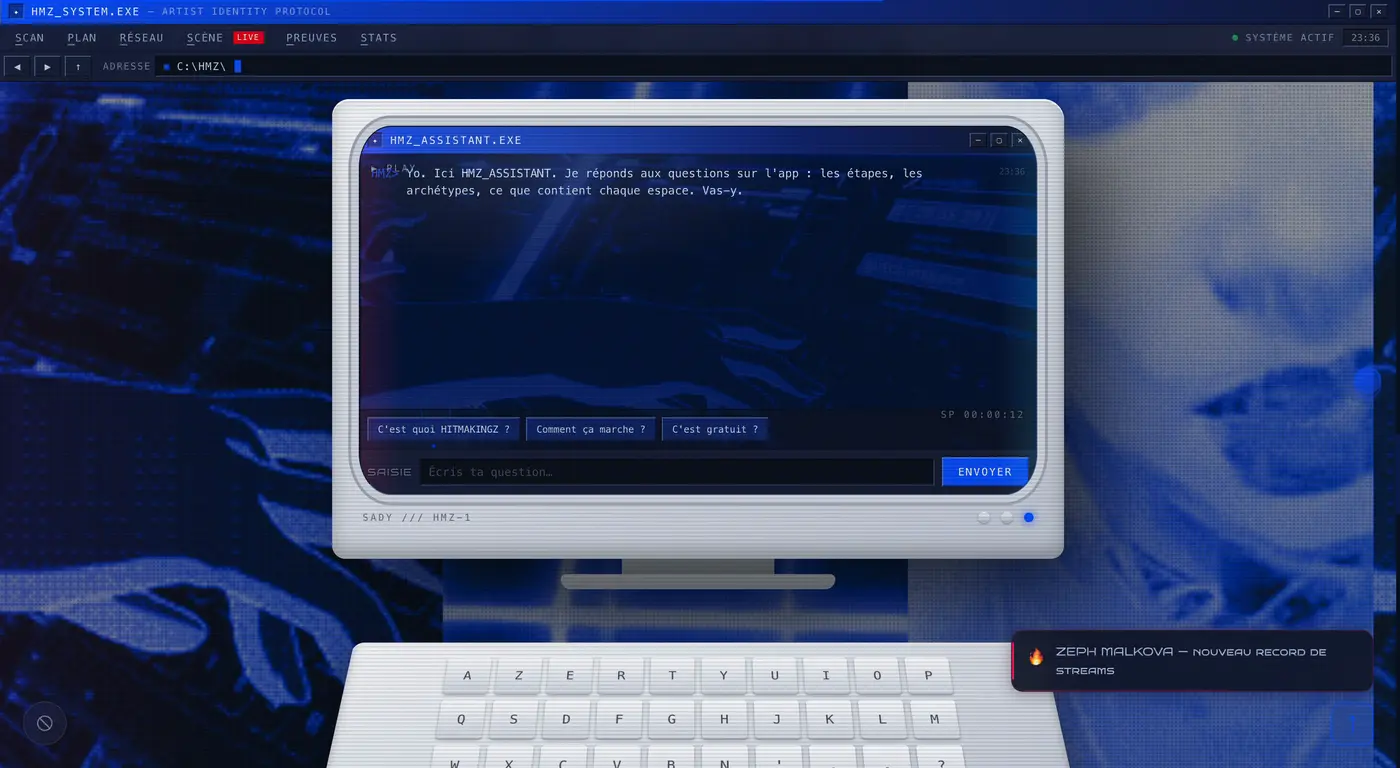
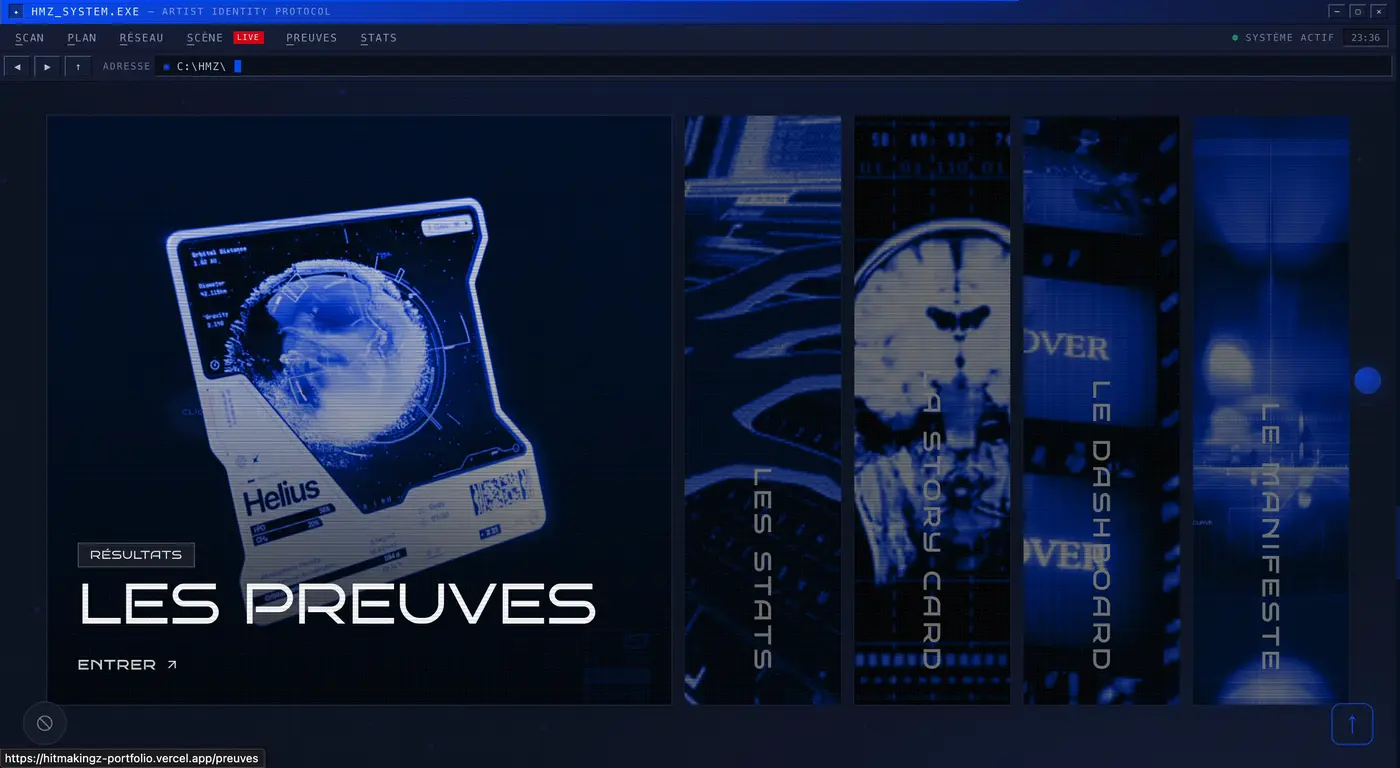
The application is live: you create an account, take the Scan, receive your archetype and your plan.
@MRSADYBRUSSELSSix contacts, six invoices, nobody in charge of direction: how the AVANT-GARDE pitch deck tells the story of a Brussels creative house, from the problem to the finish line.
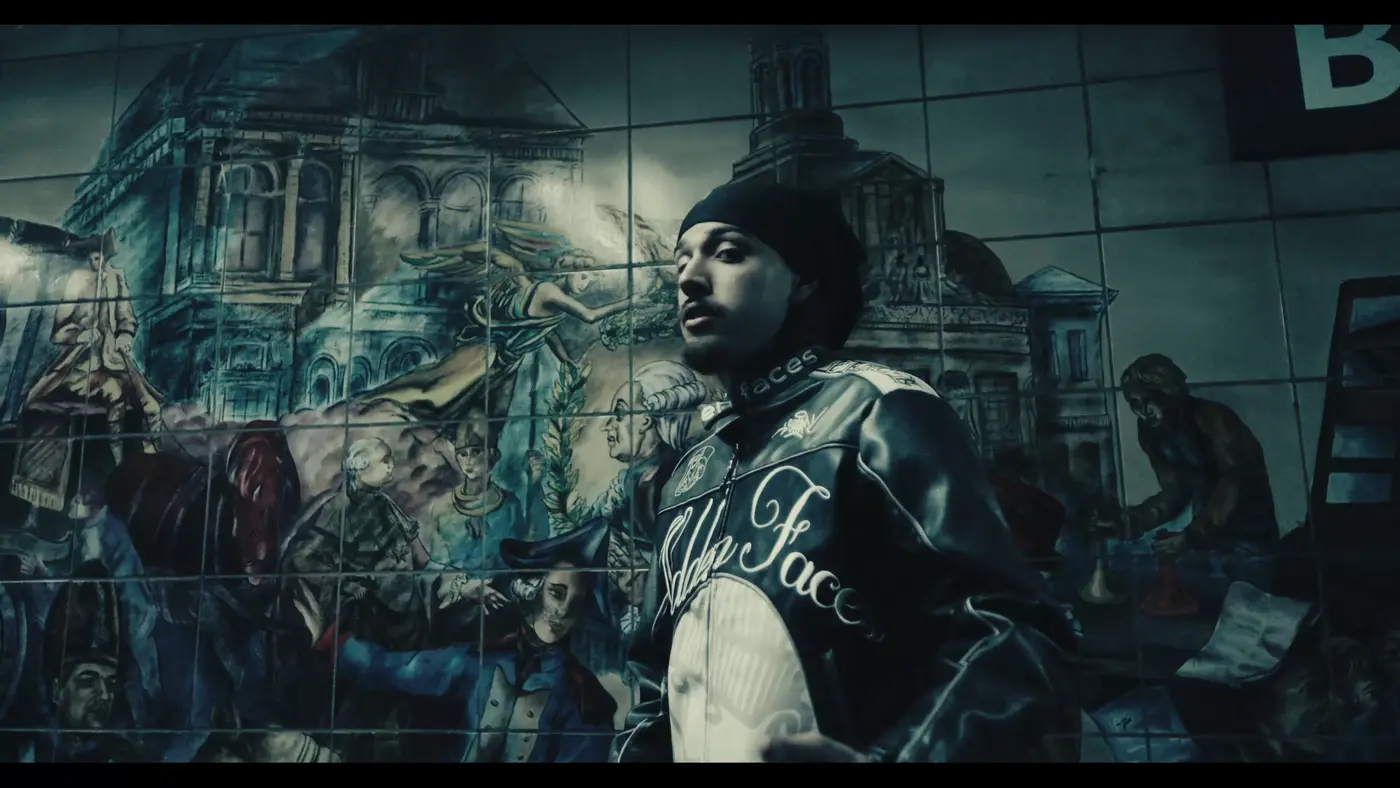
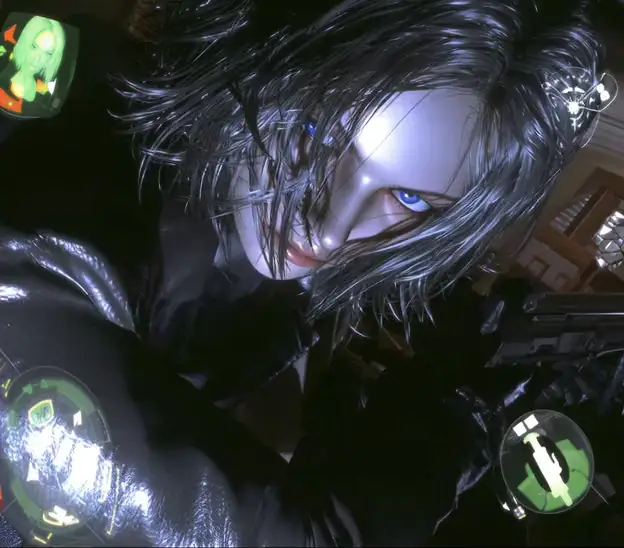
@MRSADYPARISHow the art direction of the “Lazy” video was written before the shoot: three sorted references, five colours, effects by the drop and a list of things not to do.